A Complete Programme for the Entire School Community
A curriculum designed for the Indian classroom — the leading music education programme in India, and among the finest in the world. Every child is born musical.
One journey, page by page
Turn the pages — this is the walk every Sangeet4All child takes, from first sounds to a university-ready portfolio — through six books written by Saskia Rao-de Haas.
Play.
Learn.
First sounds
Music from the very first school day — voice, movement, and worksheets designed to stimulate hand-eye coordination, composing, and reader-readiness. Instruments are in small hands from the start.
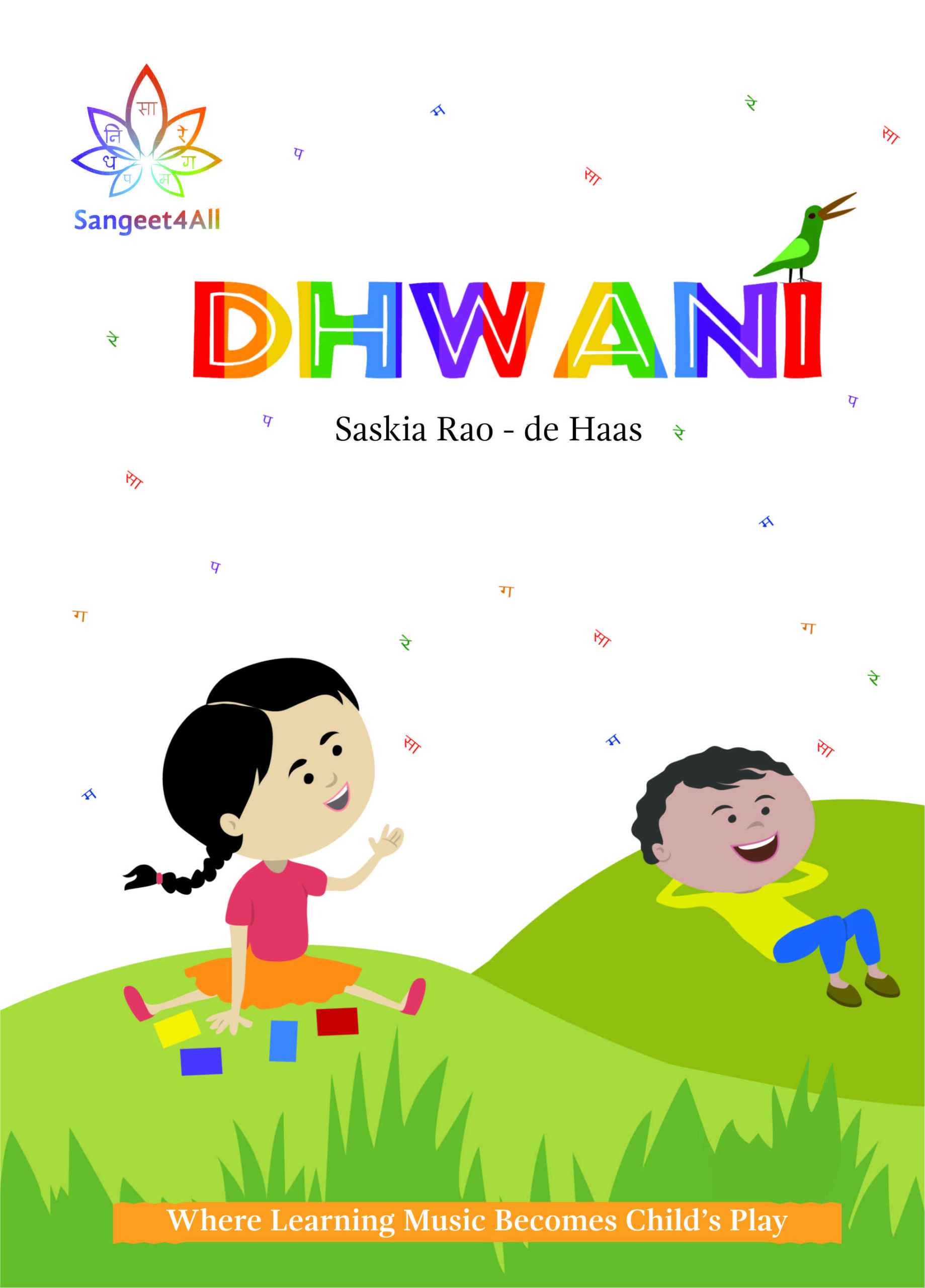
Dhwani
The world of sound opens: singing, listening, playing together. Reading music begins here too — through Sangeet4All’s own colour notation, the first step on the path to sargam and staff notation.
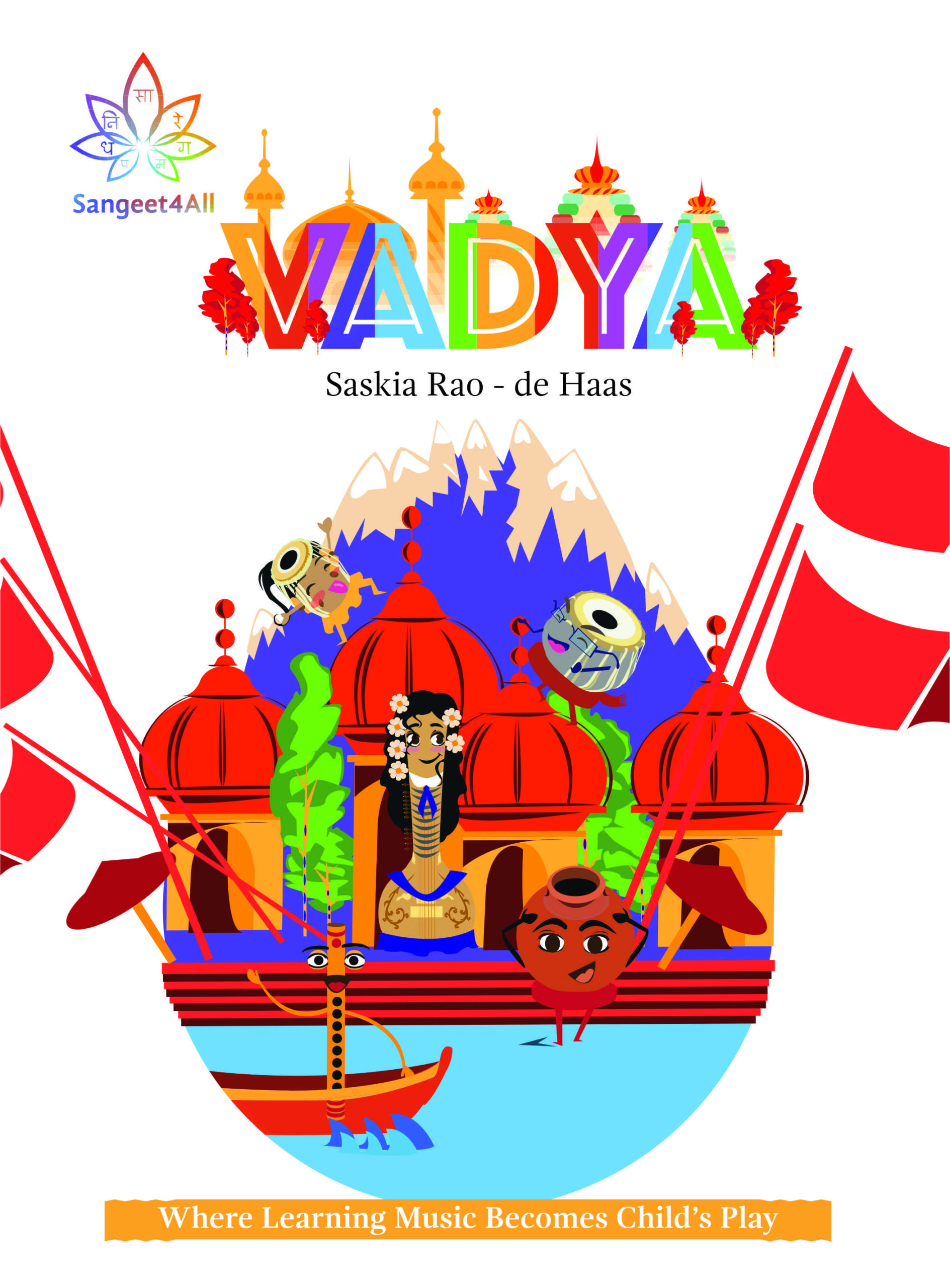
Vadya
The rich heritage of India’s musical instruments — children meet them, hear them, and make an instrument of their own. The Bansi arrives: their first wind instrument, a bamboo voice matched to a young child’s breath.
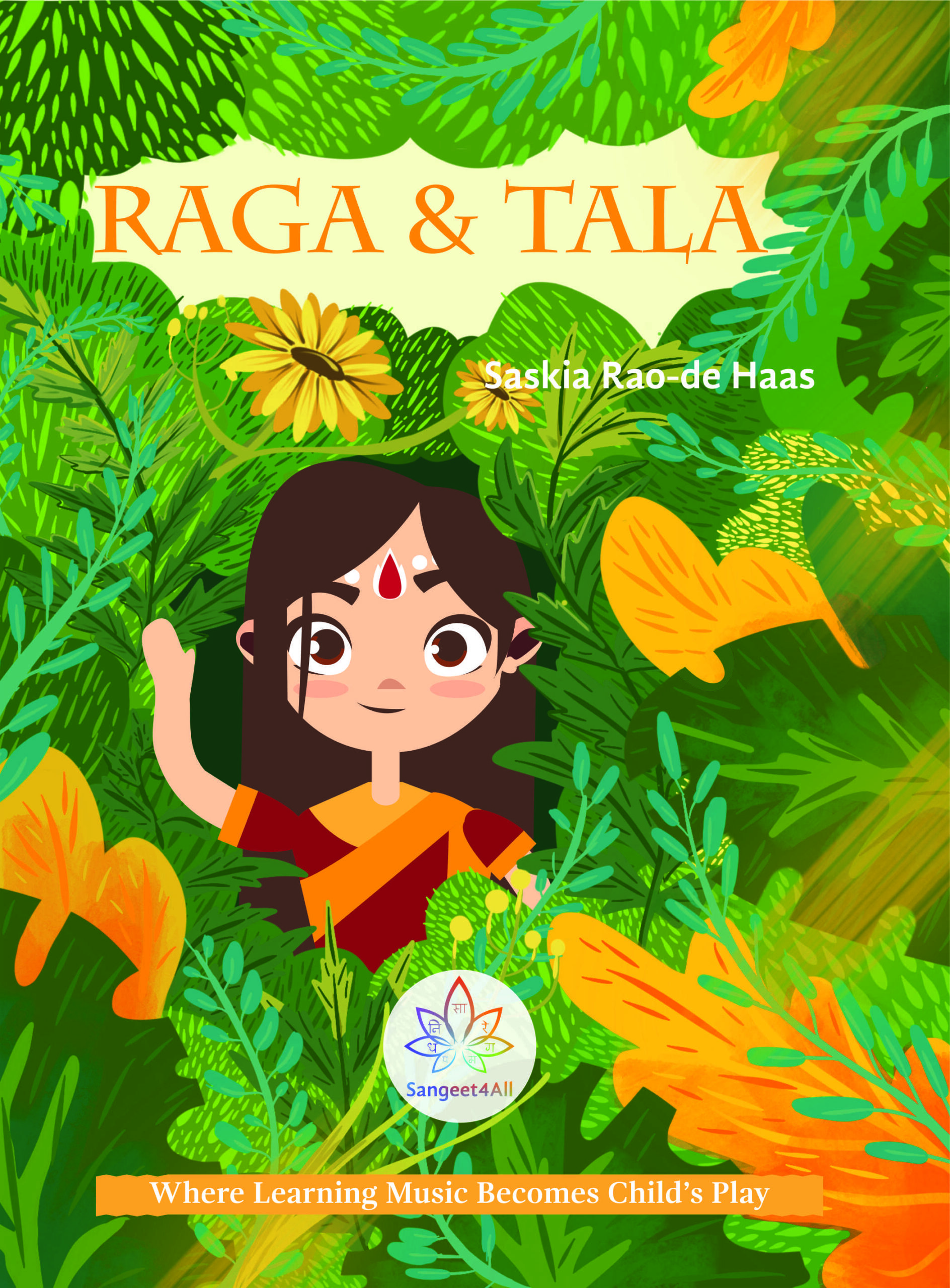
Raga & Tala
Melody and rhythm take root — raga through voice and Bansi, tala through konnakol and percussion. Understanding and joy grow together.
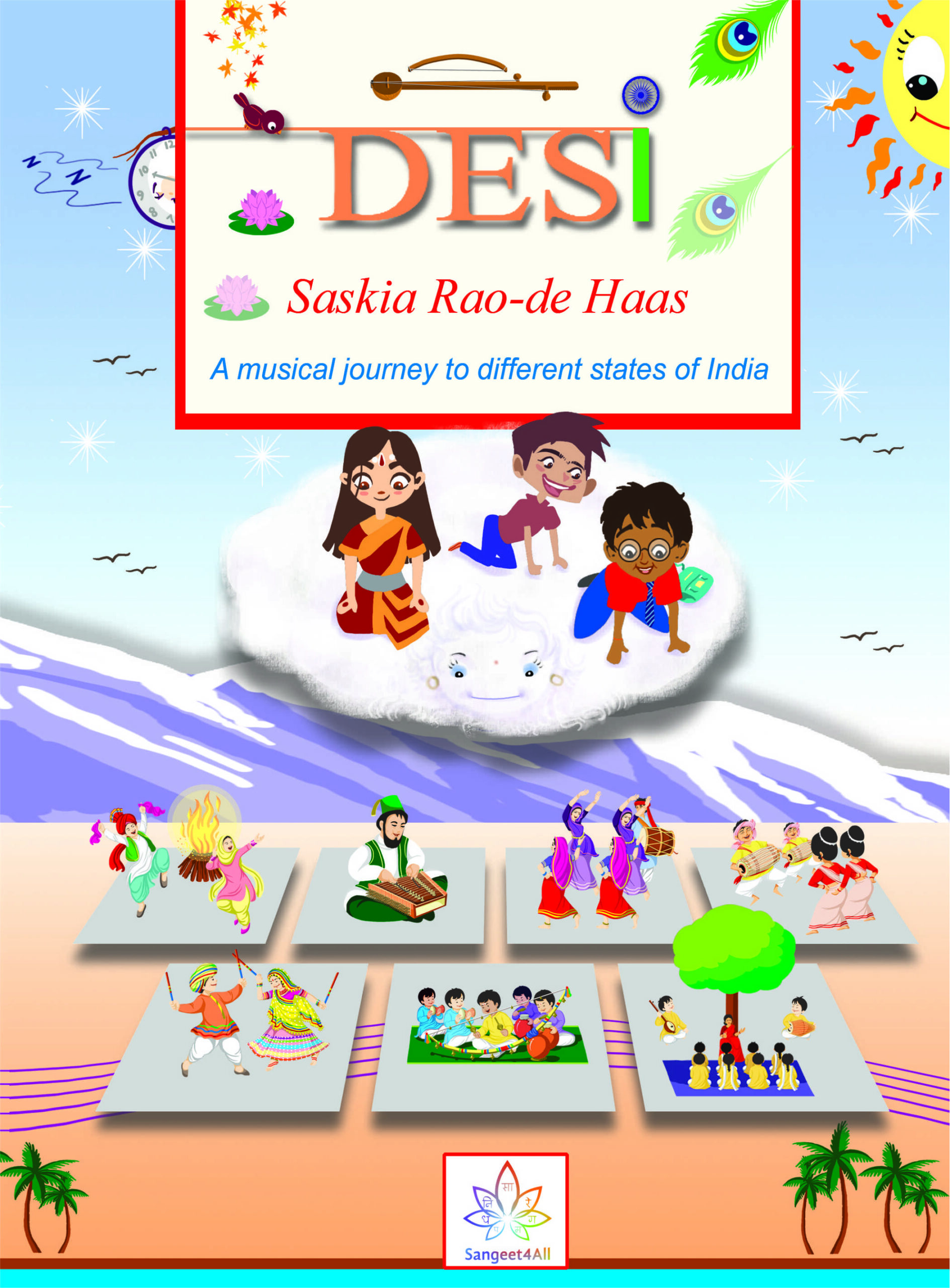
Desi
India’s living musical landscape — and a new instrument in every pair of hands, with the whole class drumming together in circle.
The informed choice
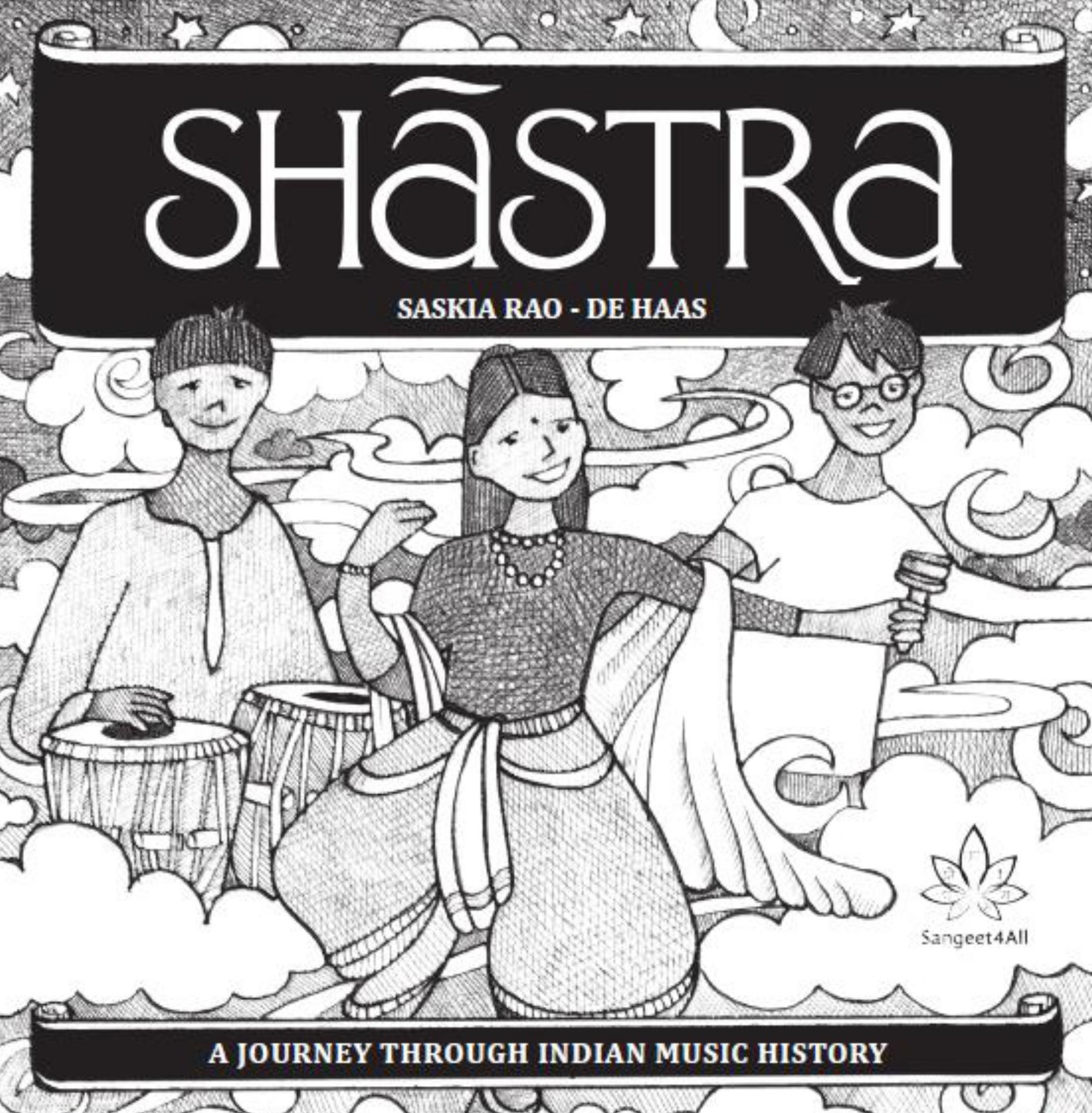
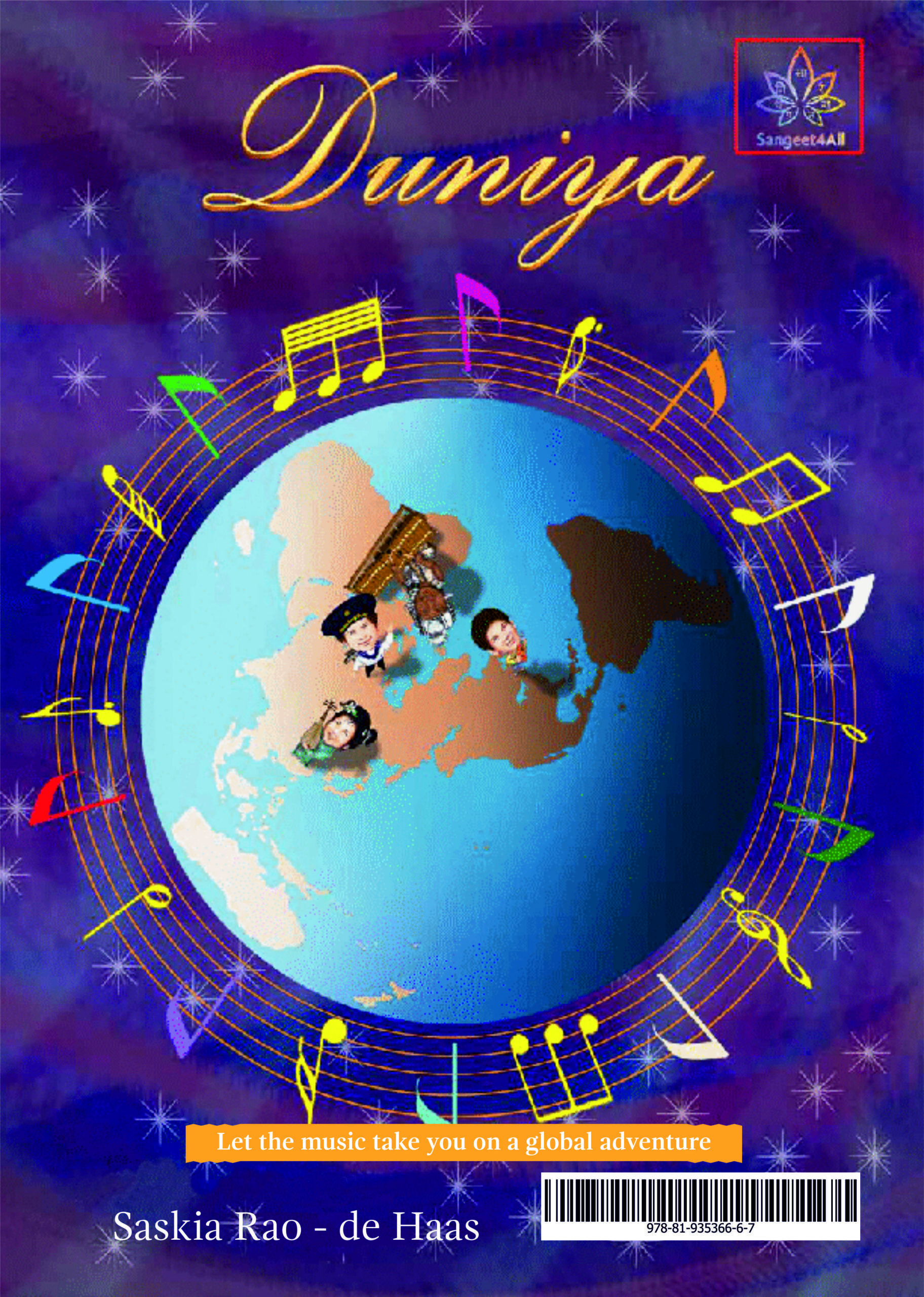
A year of introduction to both worlds — Shastra and Duniya — so every child chooses their stream knowingly, with their teacher beside them: Shastra or Duniya? Vocal or instrument? Choir or Orchestra?
Two streams
Shastra — Indian music specialisation, vocal or instrumental. Duniya — Western music specialisation, vocal or instrumental.
In both streams, students carry their music into standing Junior and Senior Choir & Orchestra.
The university-ready portfolio
In both streams, high school students build a portfolio of their own performances, compositions, recordings, and research projects — integrated with their board, whether CBSE, ICSE, IB, or Cambridge, and built to prepare them for music programmes in higher education.
Before middle school, every child has played the Swartarang, the Bansi, and the ukulele, kept rhythm on the Tala Chakra, and joined a drum circle. All thirty children in the class instead of a selected few on stage.
The base on which everything else stands
The first ten years are when a child’s musical foundation is laid. By the end of primary, every Sangeet4All child already carries all of this:
A child who already carries all this has the perfect base to specialise — to represent the school in concerts, record their own music, and explore ragas, talas, devotional, regional, and world music in depth through the middle and high school years.
Not just a music class — a whole system
Most schools think of music as one period a week. Sangeet4All is built on five parts that work together — so music lives everywhere in the school — assembly, maths class, the annual stage Everything on this page is one of these five at work.
Music Enrichment
Assemblies, presentations, and performances — music as part of the life of the school.
Music in Education
Arts integration — music carried into maths, science, language, and the humanities, across every grade.
Music as Education
The core curriculum — music class, choir, and orchestra, Nursery to Grade 12.
Assessment
The Seven Pillars — teacher, peer, and self-assessment that tracks real musical growth, without exams.
Infrastructure
Music rooms, practice and recording spaces, IT, and ongoing teacher training — the foundation it all stands on.
Implement NEP 2020 with us
NEP 2020 mandates arts education from the earliest years — holistic, experiential, woven through the school day. But a policy doesn’t train a nursery teacher to sing confidently to her class, or supply the lesson plans and instruments that turn a mandate into a Monday morning. Sangeet4All is what has been missing: the complete system that makes the policy real, in your school, through your own teachers.
We connect the music room to the classroom
Music doesn’t stay in the music room. Across every subject and every grade — from nursery right through the senior years — Sangeet4All gives teachers arts-integrated projects that carry music into maths, science, language, the arts, movement, and the calm of a settled classroom. Here are a few of the many ways it shows up in a Sangeet4All school.
“Teach children mathematics, philosophy and music — but most of all music, because the patterns in music are the key to all learning.”— Plato
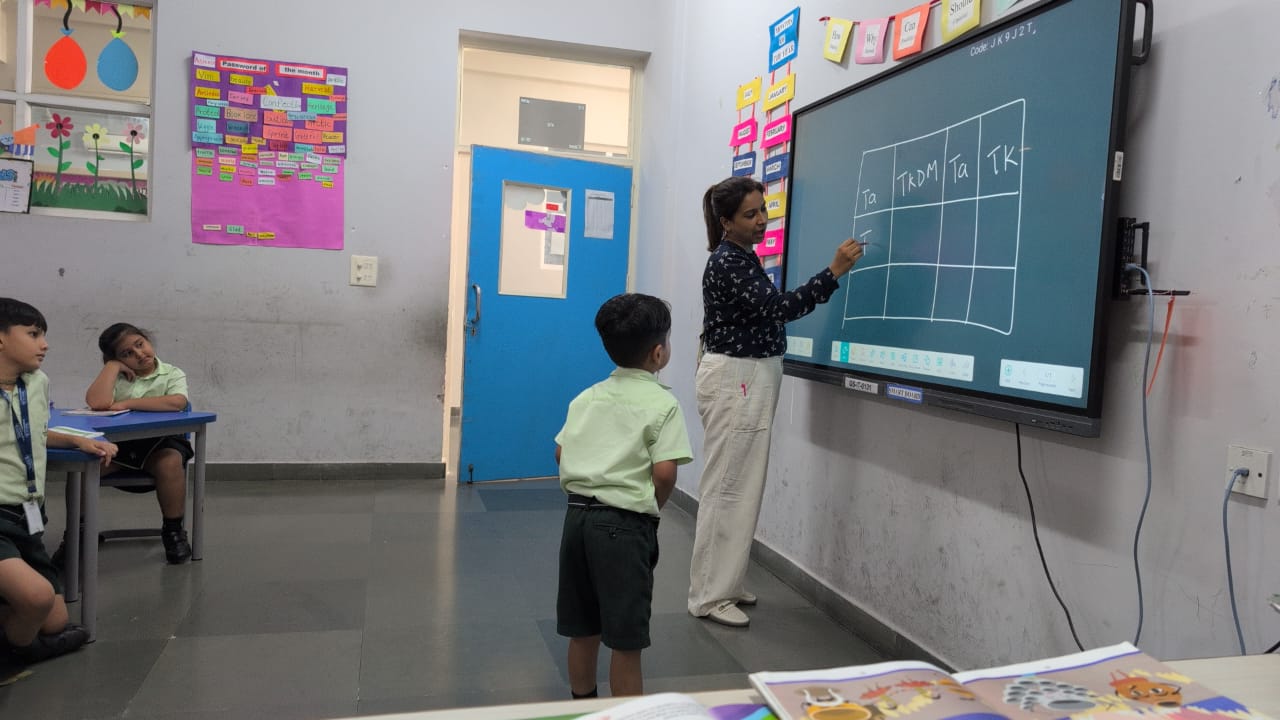
Rhythm is mathematics
Beats, fractions, patterns, and ratios — a bar of music is arithmetic a child can hear and clap. Tala becomes a way into number sense, and the maths lesson and the music lesson teach each other.
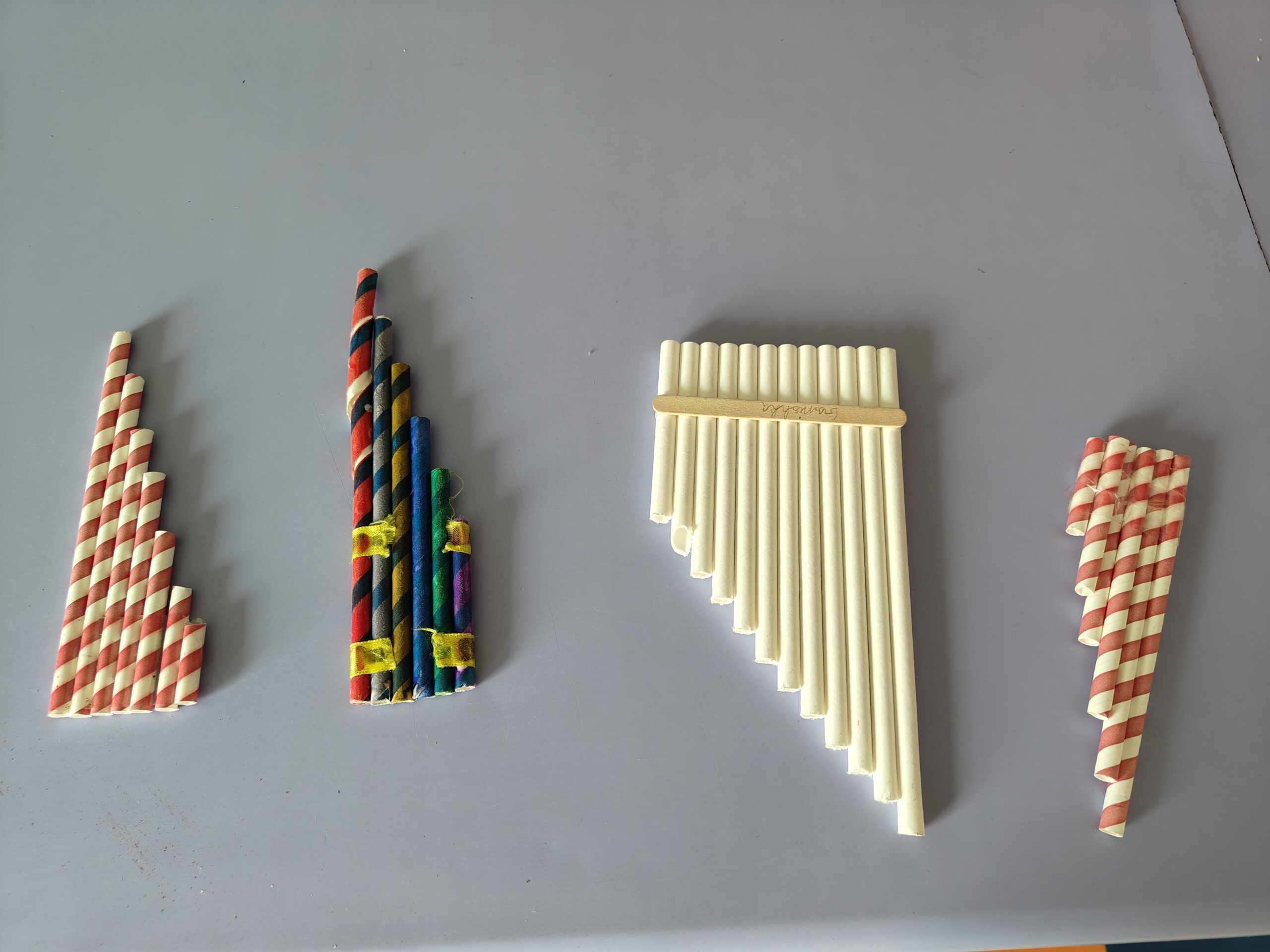
Making their own instruments
Children build a working instrument with their own hands — measuring, cutting, tuning, and understanding how sound is made. Craft, design, and physics arrive together, and the instrument they made goes home with them.
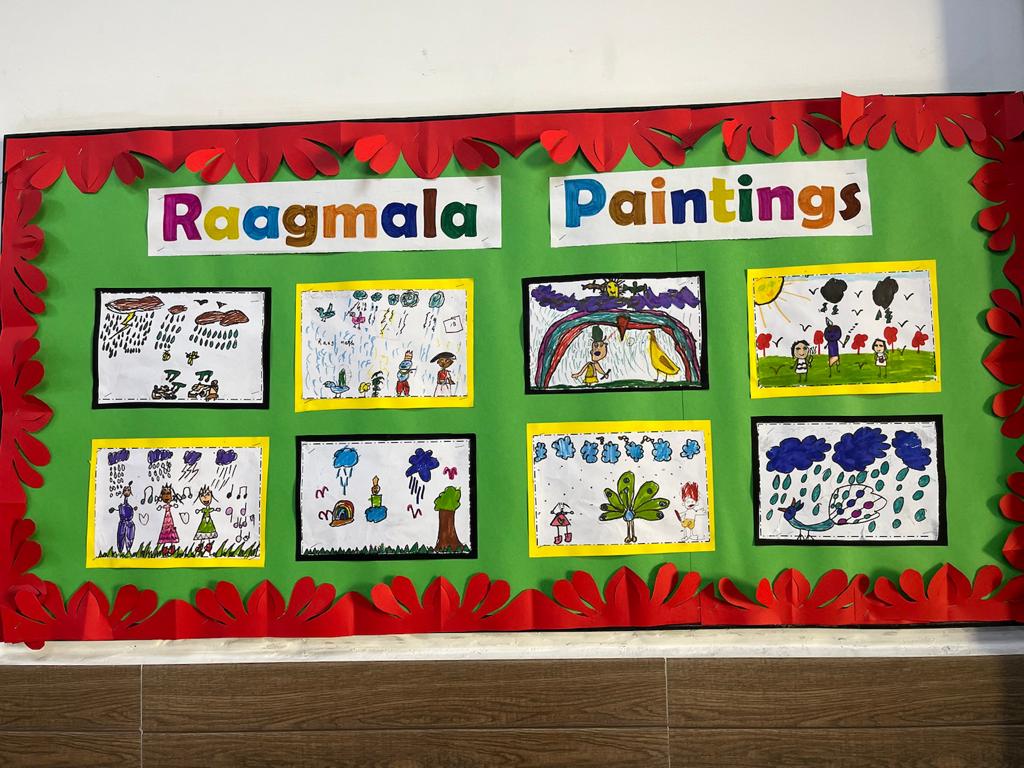
The Raga Mala exhibition
Children paint the ragas they are learning — mood, season, and time of day rendered in colour. A centuries-old tradition where music, painting, and poetry meet, brought into the school as a whole-year project and exhibition.
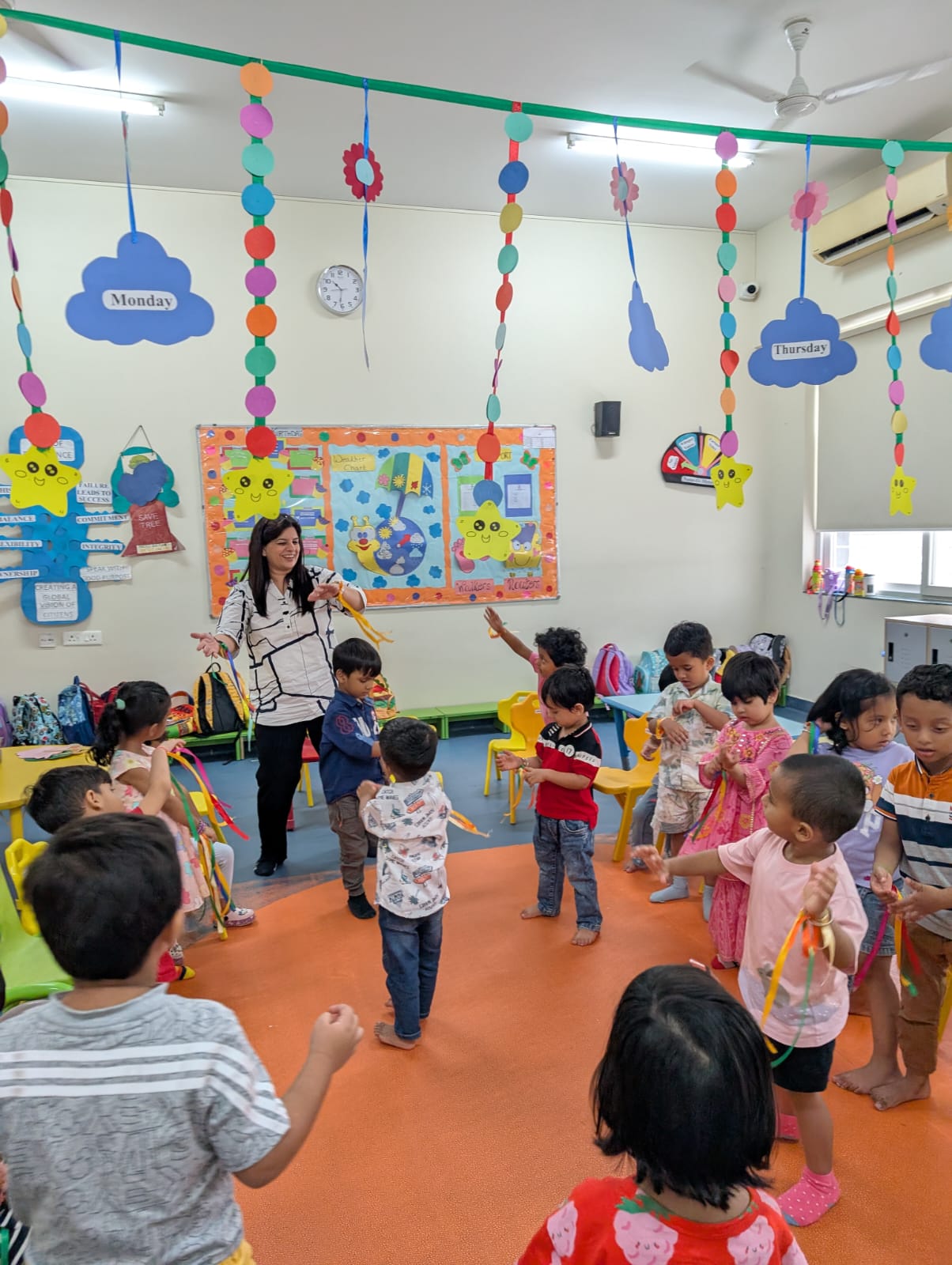
Moving to the beat
Children keep the tala with their whole bodies — clapping cycles, stepping the pulse, feeling the shape of the rhythm before they name it. Coordination, balance, and a sense of structure grow through movement.
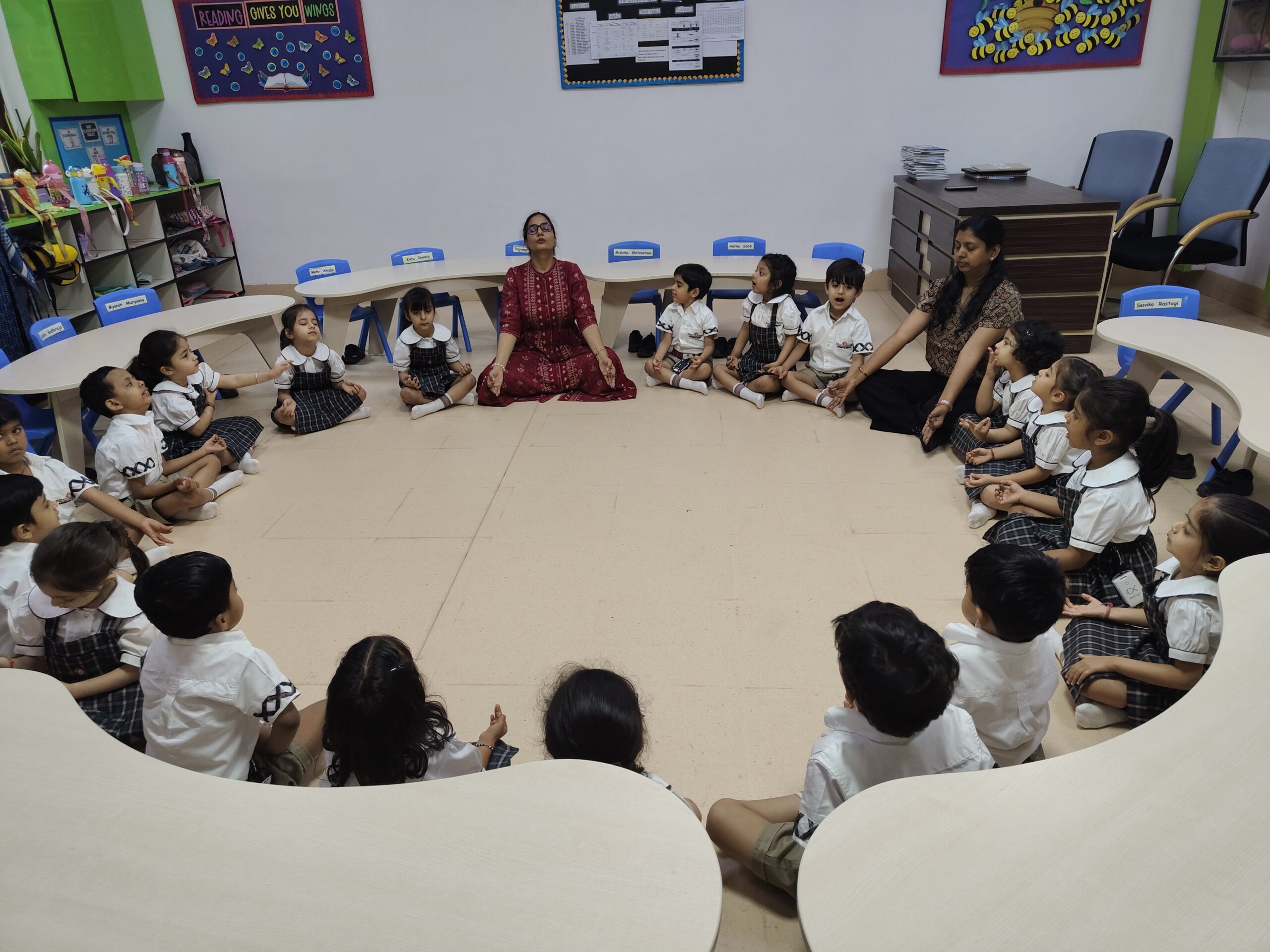
A moment of stillness
A raga to settle into, breath and attention gathered before the day’s work. Children learn to listen closely and grow calm — music as a way to steady the mind, not only fill the room.
We M-power your teachers
We believe in empowering teachers — music teachers and classroom teachers alike, working together rather than in separate worlds. Sangeet4All doesn’t parachute a specialist into your school; it builds lasting musical capability in the team you already have, and stands beside them all year long. And because no two schools are alike, we help you adapt the programme to yours.
30 class lesson plans for every grade
A full year of structured, ready-to-teach lessons for every grade.
Festival & national day plans
Special lesson plans for festivals and national days — music woven into the school’s own calendar.
Worksheets & integration plans
Worksheets and music-integration plans connecting music to the wider curriculum.
Assembly & performance planners
An assembly planner and yearly performance planner — so every stage moment builds on real classroom learning.
School visits
Our facilitator meets your teachers every month — coaching, troubleshooting, growing alongside them. Our program head visits the school once every 3 months and the founder at least once a year. Weekly online meetings, feedback reports and: ALWAYS available to talk.
Onboarding training, every year
Every school year opens with fresh onboarding training, so new and returning teachers start strong.
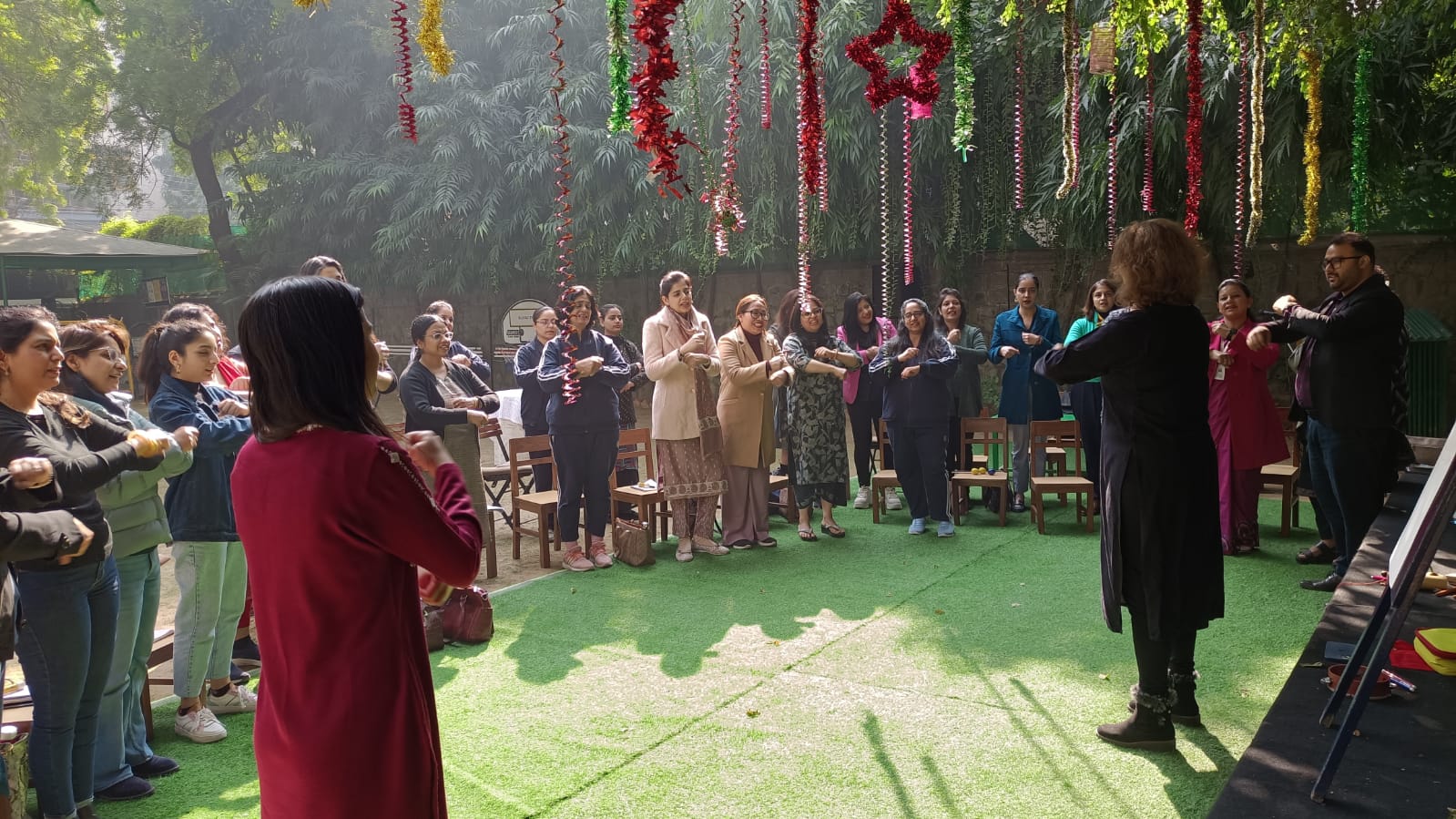
How every lesson plan is built
Music class is not just singing. It is instruments, rhythm, theory, listening, movement, and mindfulness — woven together and planned to the last minute. Sangeet4All comes with over 300 ready-to-teach lesson plans across the grades — each one adaptable to your school’s needs. Every lesson follows the same shape, and every concept returns at increasing complexity year after year — so a teacher who has never taught music before can still teach it well from day one.
Decades of research link early music education to stronger memory, language, and mathematical thinking — and the key learning window opens before age ten. Every week matters. Sangeet4All is built for exactly that window, and for the whole life beyond it.
Designed for small hands, built to teach
Swartarang
Tuned metal keys that lift out so the instrument itself teaches, mallets sized for a child’s hands — and an entire class of thirty playing together from day one. In classrooms from India to the US and Europe.
Tala Chakra
The rhythm companion — small percussion in full class sets, building tala, konnakol, and rhythmic memory from the very first year.
Bansi
The first wind instrument — a simple bamboo voice matched to a young child’s breath, teaching breath control, pitch, and melodic expression, and carrying the cultural resonance of the bansuri.
Ukulele
The bridge to harmony and song — chords, strumming, and accompaniment, opening the door to the world’s popular music while reading tabs joins the music-literacy path.
Performing, all year round
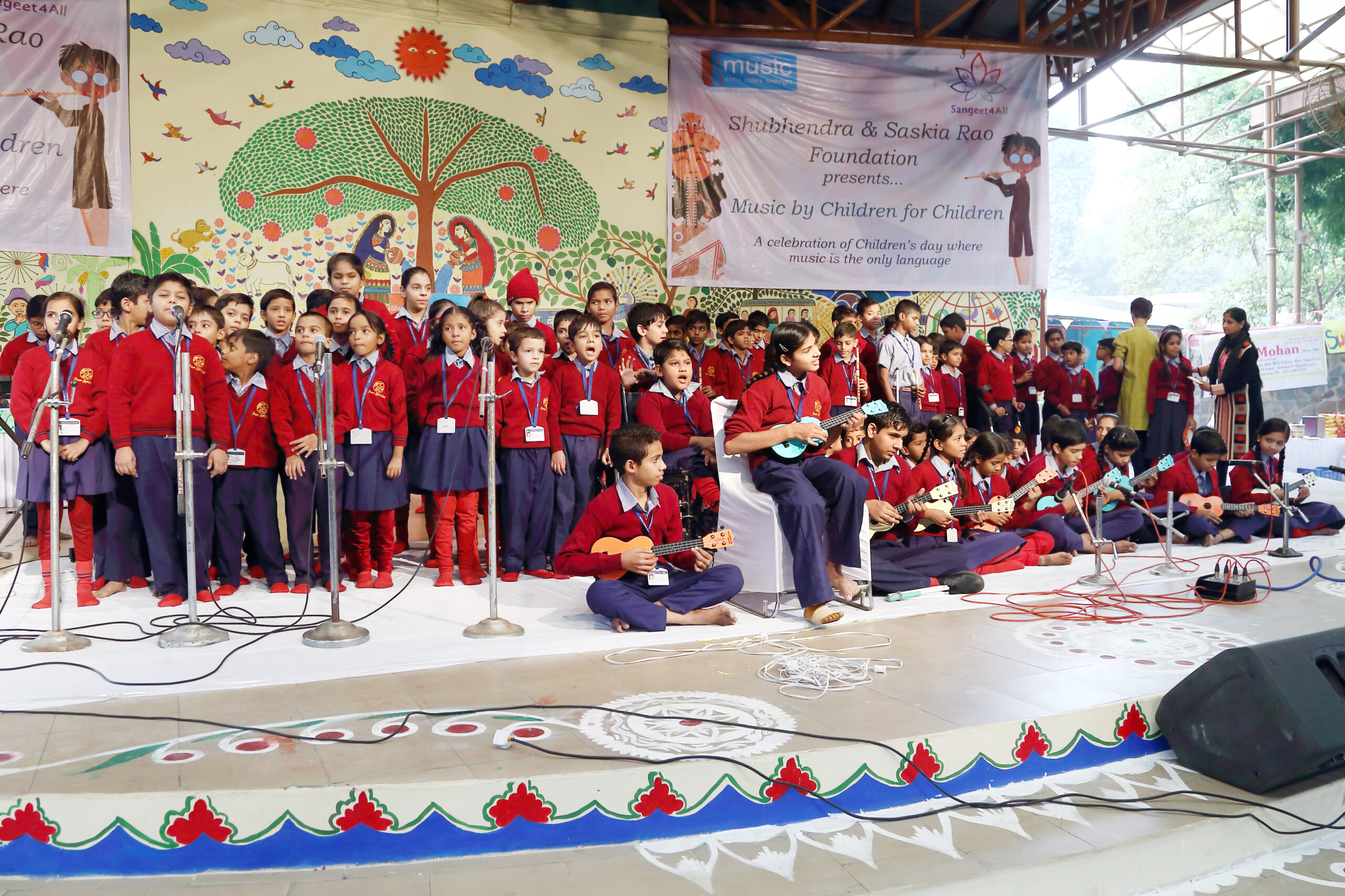
Children perform throughout the year — and performing becomes sharing without pressure, a learning outcome of the process itself. Assembly, baithaks, festivals: all great moments for your young artists to shine.
Informal sharing in the classical tradition — parents welcome, no costumes, no pressure. The learning itself is the show.
Music as part of the school day, not separate from it — rotating classes and choir, so music stays living, not occasional.
Junior and Senior Choir & Orchestra make the school’s artistic identity visible — the visiting card of your school.
The flowering of a full year’s work — not a three-week scramble. Festivals and national days join the calendar all year.
The Seven Pillars
In a government school in Delhi, a young girl struggled to match pitch during a singing exercise. By conventional standards, she was failing. But she was completely absorbed in the music, moving naturally to the rhythm — and quietly guiding a classmate who seemed lost. She understood music deeply. She simply needed more time with her voice.
That observation is why Sangeet4All’s Seven Pillars — Voice, Rhythm, Listening, Instrumental, Music Literacy, Conceptual understanding, and Behavioural/social-emotional development — translate the same holistic judgment a guru has always used into a framework any classroom teacher can apply, growing directly out of the act of teaching itself.
Growth is documented through structured observation, portfolios of recordings and creative work, and peer and self-assessment — building a picture of each child’s musical journey that a single test could never capture.
Projects, performances, classwork
The Seven Pillars aren’t a philosophy on paper — they’re already built into a working assessment sheet for every unit, running every term. Each child is looked at three ways, so no single moment decides the picture.
Project Work
Hands-on projects that reach beyond the music room — building instruments, mapping India’s folk music, painting the mood of a raga, interviewing grandparents for a song.
Performance
Taking part in inter-class and inter-school performances, vocal and instrumental — the child’s growing confidence on a stage, recorded as it happens.
Class Assessment
Everyday learning measured against clear Learning Outcome rubrics — the steady week-to-week growth the Seven Pillars are built to track.
Real projects from a single year include a folk-music map of India, raga-listening reflections connecting mood to melody, and a build-your-own-instrument sequence through the four families of Indian instruments. Every one is designed, written, and ready for the teacher — not left for them to invent.
Schools record it their own way — as marks, grades, or remarks, following the school’s own rules. Sangeet4All fits your report card; you don’t rebuild it for us.
What it looks like
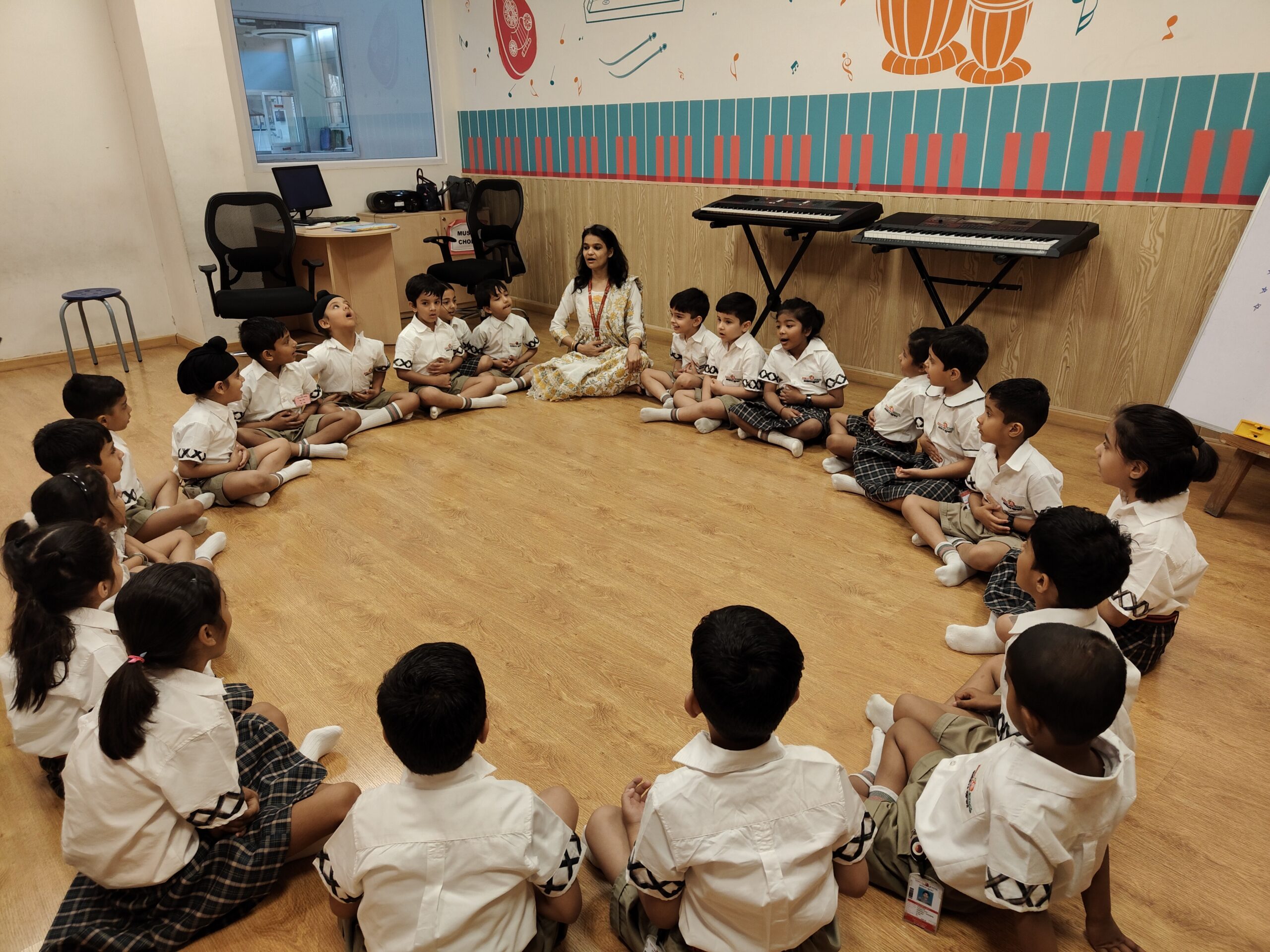
Young children, first classes
Pre-primary
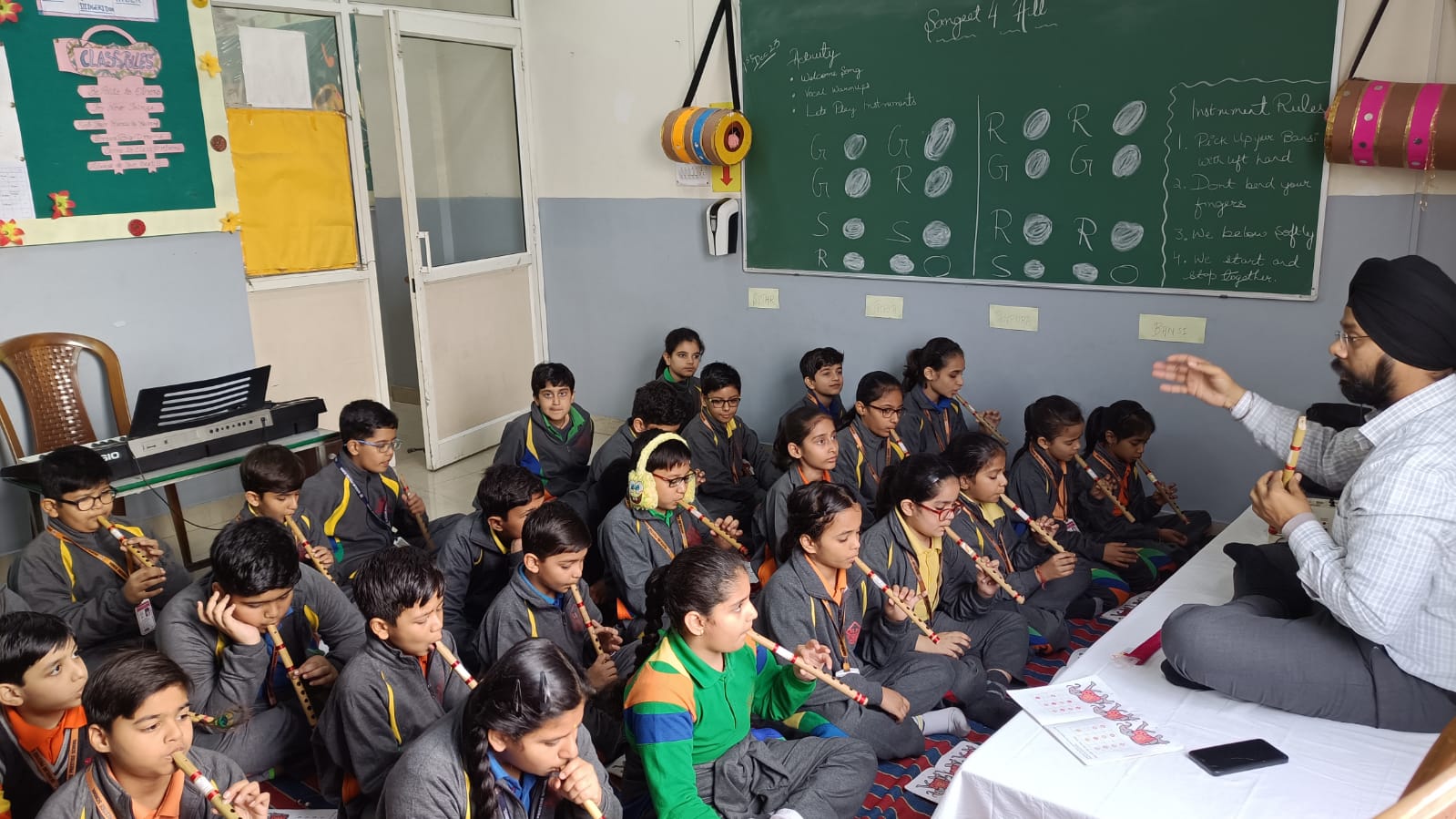
A primary classroom in session
The everyday rhythm
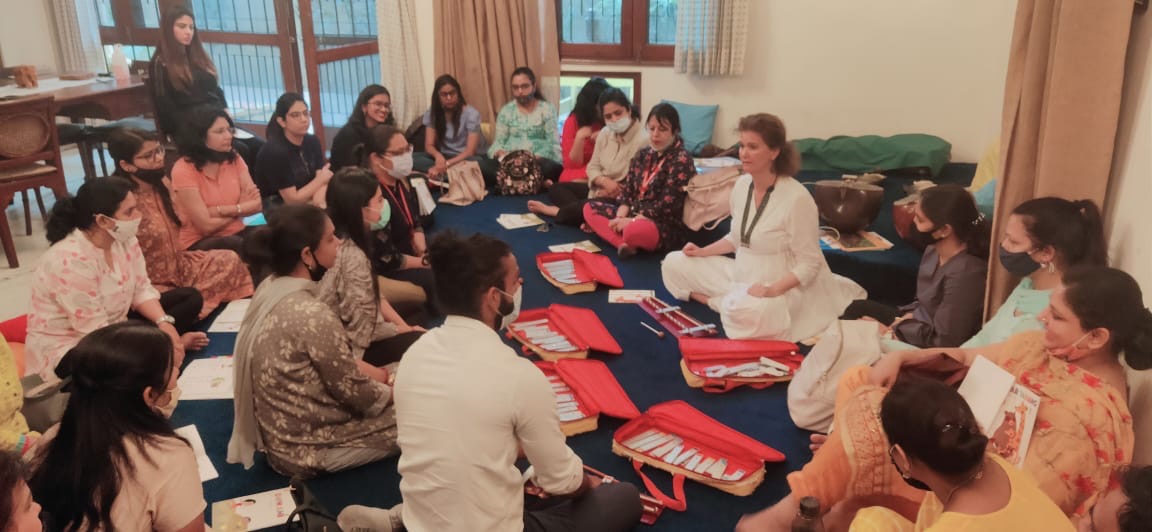
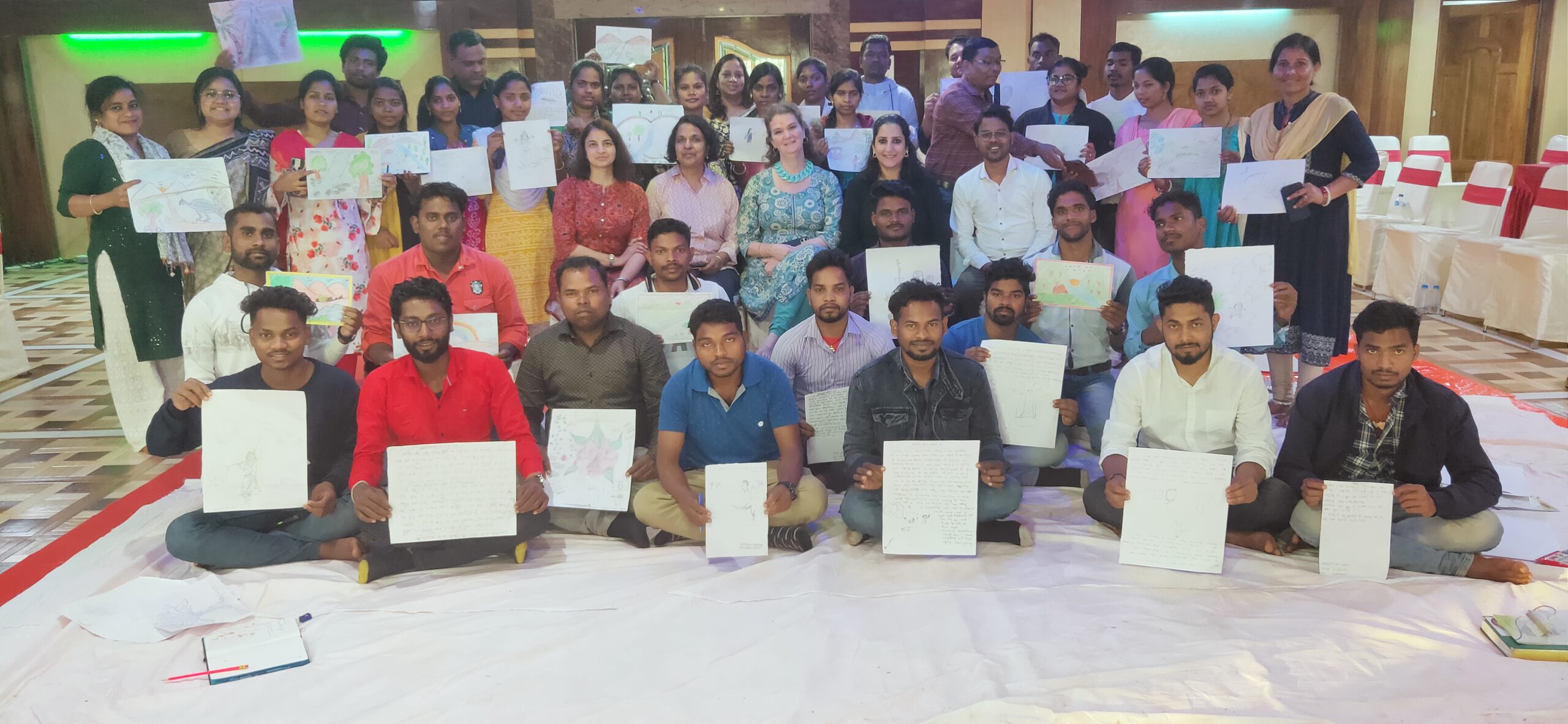
Teacher training in progress
Educator certification
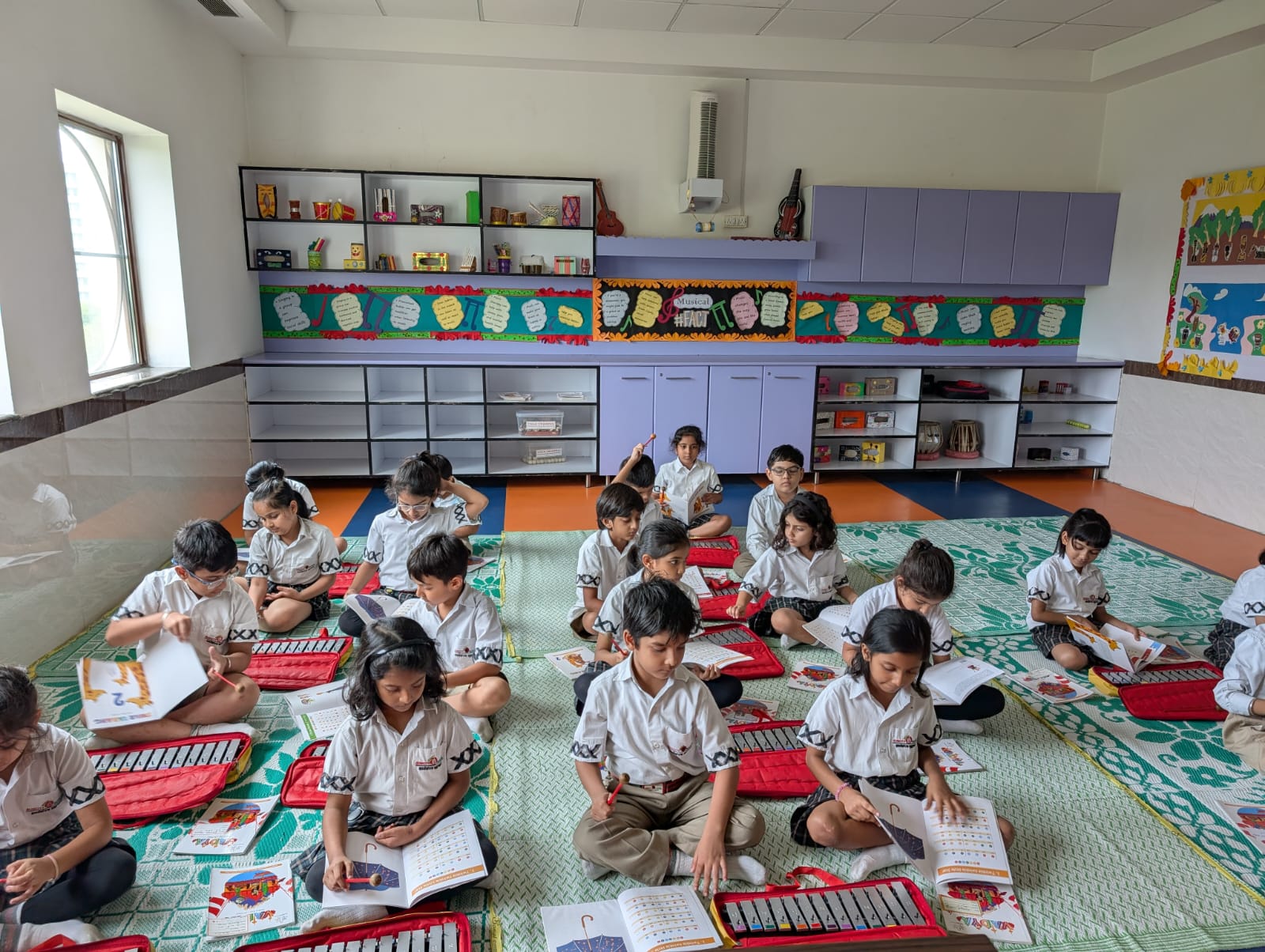
Performing on the Swartarang
Instruments in action
From first hello to full music programme
We never arrive with a fixed package. We begin by understanding your school — then build the right programme around it.
Visit & diagnose
We visit your school to observe and understand your infrastructure, your teachers, and your children.
Consult & tailor
Together we choose the Sangeet4All modules that best fit your school — nothing more, nothing less.
Onboard your teachers
An onboarding workshop launches the programme, with your own teachers trained to deliver it.
Hand-holding, always
Ongoing workshops — at our centre, at your school, and online — plus weekly then monthly assessment, and monthly facilitator visits. We never leave you to it.
Some of your questions, answered
Every child who breathes has rhythm; every child who speaks already carries melody. I don’t hand music to a chosen few — I place it in all of them at birth. Thirty children, thirty Swartarangs, one trained teacher, every one of them playing. Watch.
To read your Shakespeare, a child first traces the letter A. To sing my raga, a child first simply listens, and plays. The difficulty you imagine belongs to the master’s stage — not the child’s first joyful step. Children learn music. The styles come later.
Children love chocolate too — yet you would never feed them only chocolate. My classes overflow with joy, but joy is the doorway, not the destination. This is music education, not entertainment. The delight is how the learning gets in.
Not extra. Essential. I live inside your mathematics, your languages, your memory, your calm. I help build the very brain a child will think with. Give me the whole school day — not the minutes left over.
A gifted musician is not yet a gifted teacher. Give your teachers a curriculum they can hold and adapt, training that meets the real classroom, and one another to learn beside — and I will fill every room in your school with music.
Ways to work with us
It has always been our mission to keep Sangeet4All affordable — at the best quality possible. Programmes are tailored to your school’s size, infrastructure, and teachers, and the first conversation is always free. Tell us about your school, and we’ll find the right way in.
The School Programme
The complete curriculum — books, instruments, teacher training, certification, and the Seven Pillars assessment — delivered through your own staff, Nursery to Grade 12.
Enquire for Your SchoolEducator Certification Course
For individual teachers and musicians: train in the Sangeet4All methodology and become a certified educator — with or without a school partnership.
Apply to the CourseIB & University
Indian music modules for the IB curriculum and higher education — bringing the same rigour to international and university programmes.
Start a ConversationDownload the brochures
Everything on this page, in a form you can share with your management, your teachers, or your board.
The School Programme
The complete curriculum, Nursery to Grade 12 — for principals, school owners, and management.
Download PDFEarly Years
Running a preschool or pre-primary wing? The programme for the youngest musicians, from the very first school day.
Download PDFThe Foundation & CSR
Our outreach work and how CSR partners can bring music to children who would otherwise never have it.
Download PDF
“Music is the birthright of every child.”